Blog


  • September 17th is the Feast Day of  St. Hildegard of Bingen

    September 17th is the Feast Day of St. Hildegard of Bingen

    Hildegard Feast Day

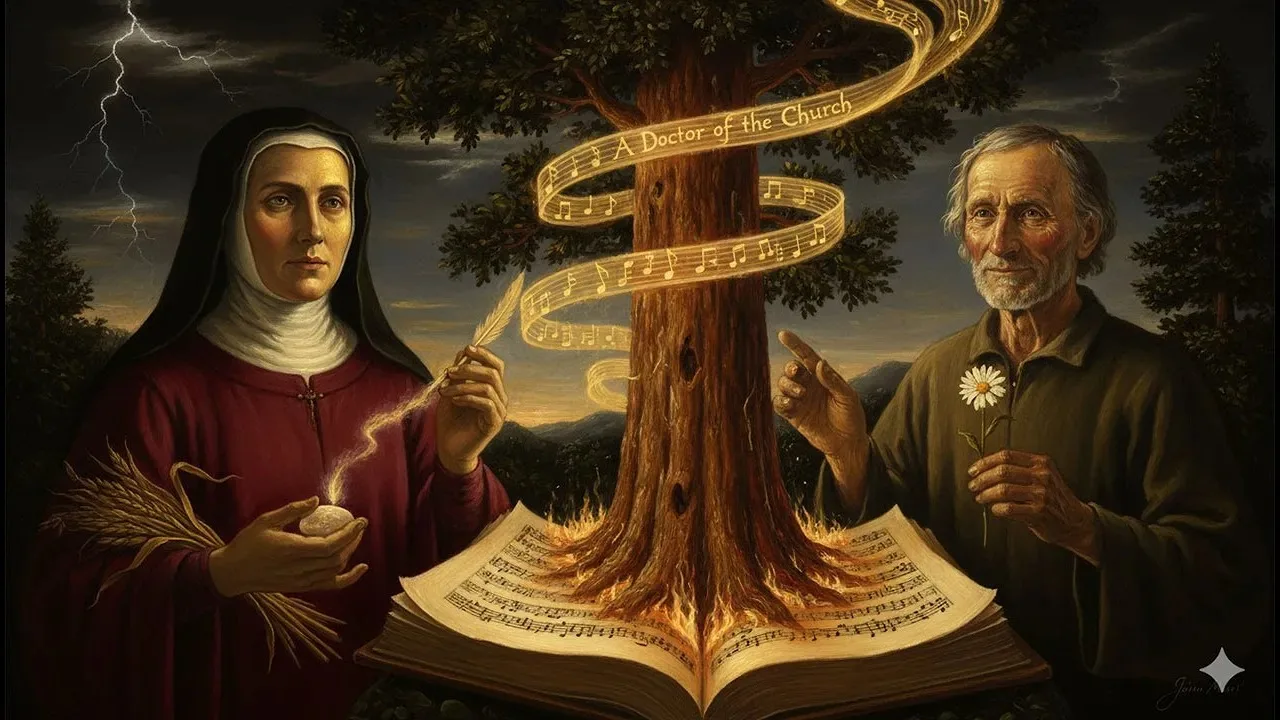
    Hildegard von Bingen has been venerated as a Saint in the Rhineland for centuries. Although she is listed in the Acta Sanctorum — the official Calendar of Saints in the Catholic Church — more than 800 years after her death had passed before Pope Benedict XVI officially canonized her for the whole Catholic Church on Pentecost Monday, May 10, 2012. On October 7 of the same year, also by the personal intervention of the German pope, Hildegard became the fourth woman — after Teresa of Avila, Catherine of Siena, and Thérèse of Lisieux — to be promoted as a Doctor of the Church.

    September 17th — Feast Day of Saint Hildegard

    September 17th is a special day on the Catholic Church calendar as it marks the feast day of a Doctor of the Church: St. Hildegard of Bingen. While some would like to think of her as the patron saint of creativity, the Catholic Church hasn’t made that an official acknowledgment yet — but we can hope.

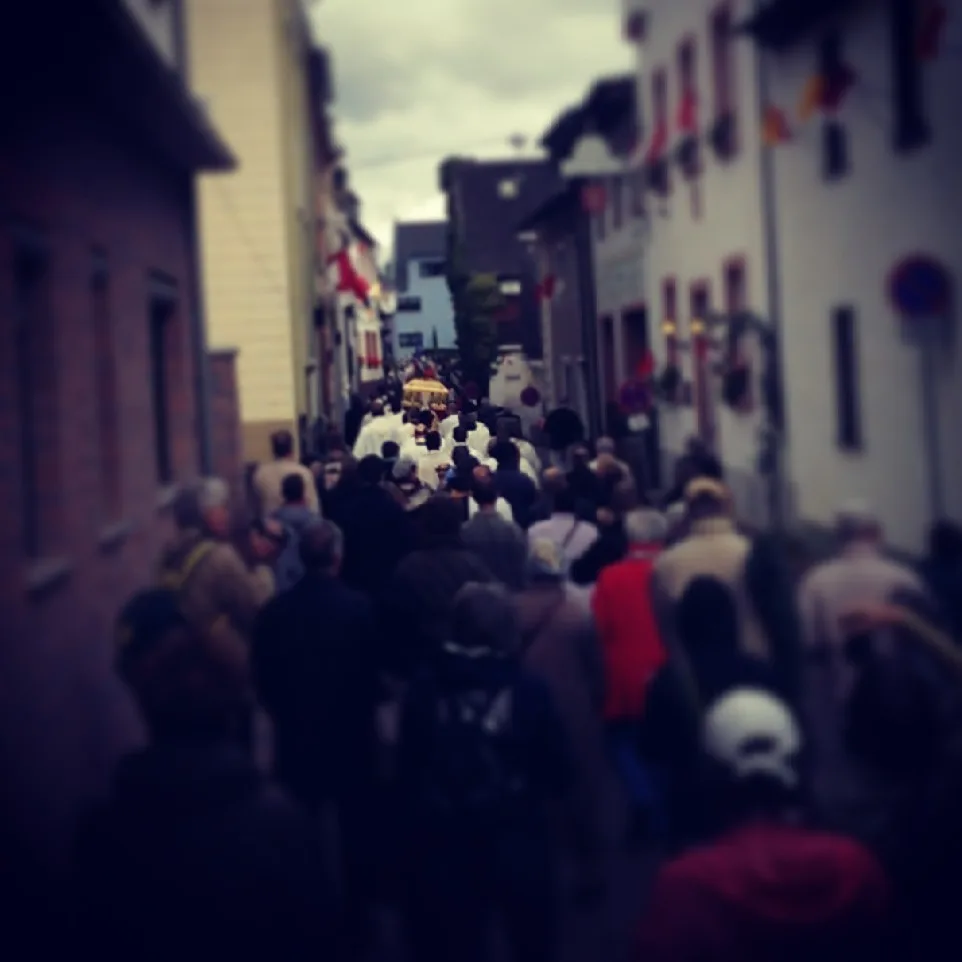
    On September 17, 2013, American filmmaker Michael M. Conti was in Germany completing filming for his documentary and took part in the procession of Hildegard’s relic during her feast day. It was a remarkable experience included in the film The Unruly Mystic: Saint Hildegard.

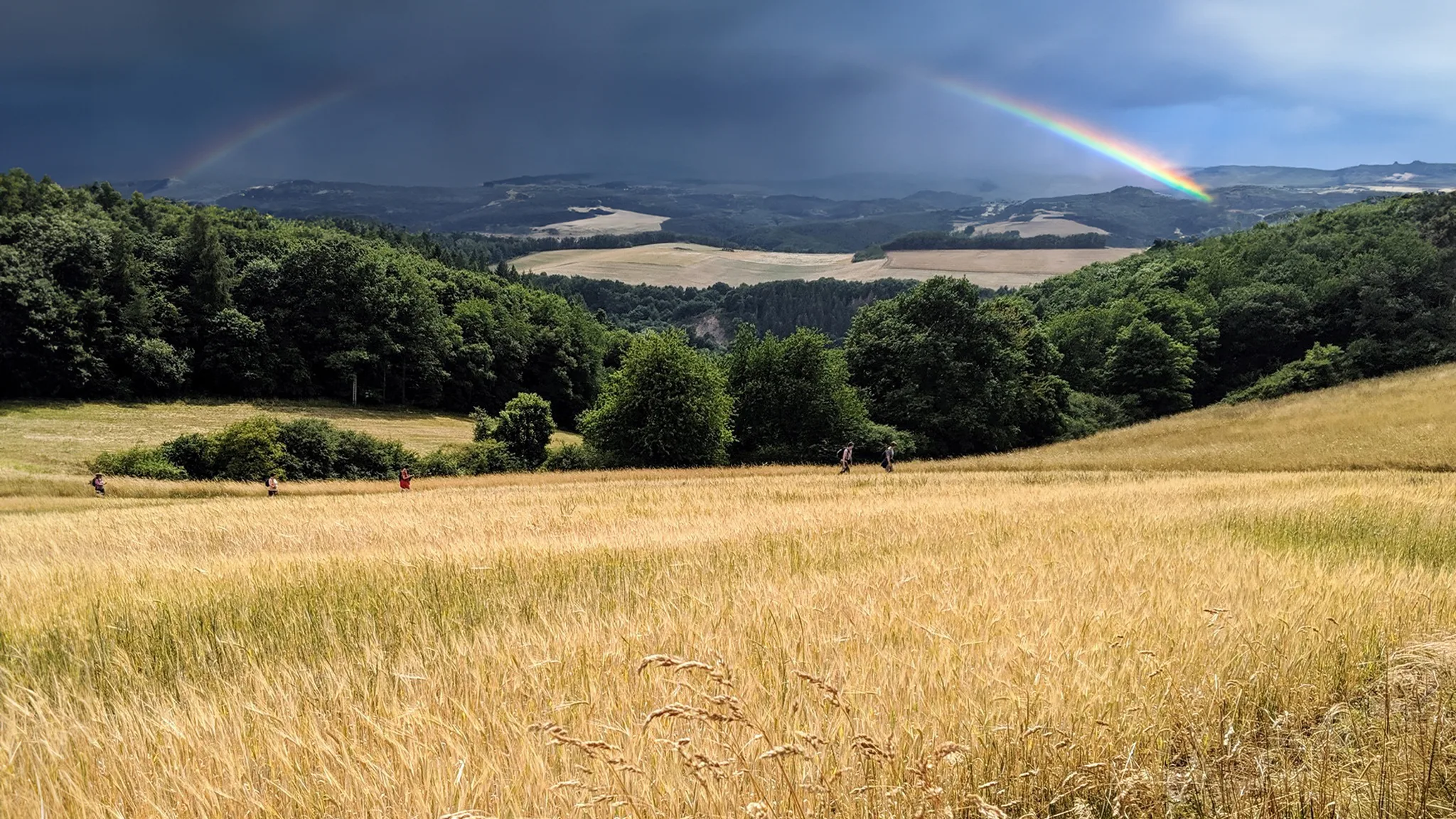
    Hildegard Feast Day procession, September 17th
    Feast Day for Saint Hildegard of Bingen, September 17th — Catholic Calendar

    How Feast Days Are Assigned

    A saint’s feast day can be the day of their actual death or a day assigned by the Church. Typically, the Church only assigns a different day when the date of death is unknown, or when several other saints are already assigned to that day. Since the number of canonized saints exceeds the number of days in a calendar year, two or more saints often share the same feast day. When overlap occurs — or when the date of death is uncertain — another date is sometimes chosen, such as the day the saint was canonized.

  • Now more than ever relevant!

    Now more than ever relevant!

    Screenings

    Now more than ever, we all long for an order in which fairness, justice, and compassion for all people is demonstrated by our respective governments. Saint Hildegard had her own “unruly-ness” toward the powers of the Church — allowing an excommunicated nobleman to be buried in the cemetery at the convent, defying the direct orders of the Bishop of Mainz. Whose teaching was she following in taking that unruly action? That teaching is still relevant today.

    Hildegard didn’t resist quietly. When the Church threatened to place her convent under interdict — forbidding all religious services, music, and sacraments — she wrote back with fierce theological clarity, arguing that silencing sacred music was an offense against God. She won. The interdict was lifted. This was a 12th-century abbess standing her ground against the full institutional weight of the medieval Church — and prevailing.

    That combination of spiritual depth and civic courage is exactly what makes her so resonant now. She didn’t separate her inner life from her public one. Her mysticism was not a retreat from the world — it was the source of her willingness to engage it, challenge it, and demand better from it.

    Isn’t it time you became unruly? In unruliness, find your own mystic heart.

    Now More Than Ever Relevant

    Audiences everywhere are fired up by Saint Hildegard’s 12th-century activism, creativity, and ability to speak her mind across 800 years of distance. At screenings from university campuses to church halls, the conversations that follow are rarely about the past. They are about now — about power, about conscience, about what it means to trust your own perception when the world is telling you to stay quiet.

    Students in particular respond to her story with a recognition that surprises them. Here is a woman who was told, in every possible way, that her voice didn’t count — and who wrote, composed, traveled, debated, and prophesied anyway. That is not a medieval story. That is a human one.

    Students at Oxford Emory University discussing The Unruly Mystic: Saint Hildegard
    Students at Oxford Emory University — a screening of The Unruly Mystic: Saint Hildegard

    If you are interested in hosting a screening — at a university, a spiritual community, a festival, or a private gathering — get in touch. The film travels well. The conversation it starts travels even further.

  • Remembering Linn Maxwell Keller

    Remembering Linn Maxwell Keller

    Linn Maxwell Keller was an embodiment of Saint Hildegard in both spirit and talent — truly worthy of being her own version of a patron saint of creativity. She didn’t just perform Hildegard’s music. She inhabited it. And in doing so, she gave contemporary audiences a direct, living connection to a voice that had been silent for eight centuries.

    Linn Maxwell Keller — An Interesting Connection

    I first heard of Linn Maxwell Keller during the spring of 2013 while researching Saint Hildegard online in Boulder for my film, The Unruly Mystic: Saint Hildegard. I discovered she was performing the very next night in Denver at DU — and while I couldn’t attend, I was teaching that evening, I called her the following day to introduce myself.

    You never quite know how someone will receive an unexpected call from a filmmaker they’ve never met. Linn received it with warmth and openness. Besides inviting me to Jackson Hole later that year for an interview, she opened up an entirely new dimension of Hildegard’s music for me — the embodied, performed dimension that no amount of reading could have provided. She also allowed me to use clips of her work in the final film, a generosity that shaped it in lasting ways.

    Through Linn, I was introduced to others in her community, most notably Dr. Beverly Kienzle, who was a professor at Harvard Divinity School at that time. These connections — one phone call leading to another — are exactly how this kind of documentary gets made. Sadly, Linn passed away far too soon, just a couple of years after the film was released. The loss was felt by everyone who had encountered her work.

    Linn Maxwell Keller during her interview for The Unruly Mystic: Saint Hildegard, at her summer home in Jackson Hole
    Linn Maxwell Keller — interview for The Unruly Mystic at her summer home in Jackson Hole

    Remembering Linn Maxwell Keller (Dec 6, 1943 – June 18, 2016)

    On St. Hildegard’s feast day, many of us remember a beloved friend — Linn Maxwell Keller, an internationally acclaimed mezzo soprano whose life’s work became inseparable from Hildegard’s legacy. As The Times of London proclaimed in August 2010, and as anyone who witnessed her perform could confirm: “Hildegard is reborn as mezzo Linn Maxwell.”

    Linn performed with world-class orchestras and international opera companies, and played recital halls across the United States and in twenty-five other countries. On April 19, 2015, she performed her play Hildegard of Bingen and the Living Light to a spellbound audience at St. Peter’s Episcopal Church in Cambridge, MA — then departed directly for a tour of Australia. She completed a second play, St. Hildegard: Trumpet of God, also available on CD. With her ensemble The Hildegard Singers, she recorded two CDs of Hildegard’s music: O Greenest Branch: Songs of St. Hildegard of Bingen and Hildegard of Bingen: Songs from the Abbey. Her recordings ranged from medieval sacred music to opera to cabaret — a span that itself says something about the depth of her gifts.

    Linn is deeply missed by all of us who knew her — family, friends, fans, and the communities she supported and sustained.

    Her work lives on through interviews and selected scenes from her film at hildegardofbingen.net. You can also see more of this remarkable woman in The Unruly Mystic: Saint Hildegard, where her presence is one of the film’s most memorable gifts.

    With thanks to Dr. Beverly Kienzle for this remembrance.