For the Word of God, dwelling physically in the world, did not have the softness of the liquid of sin in the Word’s body, because as fire bakes bread and makes it dry and without any moisture in it, so also the same Only Begotten of God was conceived from the fire of the Holy Spirit and was born from the purest of virgins.
— Hildegard von Bingen, Mystical Visions: Translated from Scivias
Happy Healthy Hildegard
I discovered the happy and healthy Hildegard through the healing work of Dr. Wighard Strehlow at the Hildegard Center in Allensbach, Germany, during filming for The Unruly Mystic: Saint Hildegard. Traditional German Herbal Medicine is a practice and research area championed by modern physicians, pharmacists, and health and wellness practitioners. It incorporates time-tested techniques evolved from Klosterheilkunde (monastery medicine), folk medicine, and monastic medicine — incorporating herbal medicine, Hildegard of Bingen medicine, homeopathy, and naturopathy.
As a filmmaker I don’t pretend to offer medical advice — I’ll leave that to the real professionals. But I can speak from personal experience that Galangal is a remarkably quick remedy for a headache. The flush of warmth to the face from digesting the spice appears to stimulate the capillaries and increase blood flow in all the right places. That is simply my own observation.
Traditional German Herbal Medicine is the culmination of modern knowledge, scientific methodology, technology, and substantial historical precedent — established over generations and resulting in the 5 Modern Tenets of Traditional German Medicine.
Hildegard, Heart and Galangal
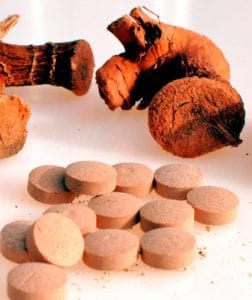
According to Dr. DeBakey, 70% of all heart attack patients die in the first few hours after a massive myocardial infarction. Few people know that galangal may help immediately and, in some cases, prevent death. Shortly before Dr. Michael DeBakey’s 100th birthday, he planned a symposium in Houston to introduce fellow doctors to Hildegard medicine. He had himself experienced the healing of a chest wound infected for nearly two years with hospital bacteria — healed through yarrow compresses applied several times daily and yarrow tea, exactly as Hildegard describes. A spelt diet also cured him of a life-threatening illness. He credited galangal with making his heart strong.
Over 20,000 people helped by galangal in difficult situations confirm it as a powerful remedy for protecting against heart attacks, strokes, and sudden hearing loss. Galangal should dissolve on the tongue — what practitioners call the “tongue-heart reflex” — preventing heart pain from developing into a full attack. Its spasmolytic properties open clogged coronary arteries, relieving pain and reducing life-threatening danger. The galangal root contains essential oils and resins that produce its characteristic hot-bitter taste, along with six other active compounds and bioflavonoids found only in genuine galangal.
Read more: Hildegard, Heart and Galangal on st-hildegard.com →
Spelt — The Foundation of a Healthy and Happy Life
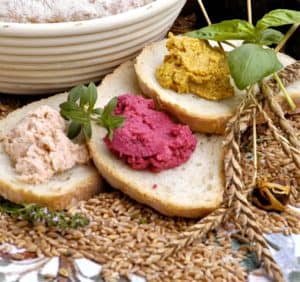
Numerous studies from around the world confirm that spelt carries significant pharmacological effects and clinical benefits. As early as the second Spelt Colloquium at the Agricultural University of Hohenheim in 1991, researchers reported that spelt — due to its thiocyanate content — has immune-stimulating, anti-inflammatory, antibiotic, and anticarcinogenic properties.
On this basis, spelt has become a foundational diet for the treatment of a wide range of auto-aggressive diseases, including:
- Gastrointestinal diseases
- Skin diseases
- Metabolic diseases
- Rheumatic diseases
- Cardiovascular diseases
- Neuropathy
- Cancers
- Detoxification from drug damage
The International Hildegard von Bingen Foundation recently participated in the publication of a doctoral thesis by Dr. Marina Franziska Bisping on spelt and wheat as traditional medicinal plants. The research describes the numerous secondary components of both grains and their pharmacological characteristics, including:
- Phytoestrogens from the lignan group — with antioxidant, immunomodulatory, cholesterol-lowering, and anti-cancer properties that may reduce the risk of lung, liver, prostate, and uterine cancers.
- Phytosterols — which reduce LDL cholesterol and lower the risk of cardiovascular disease.
Read the full article on st-hildegard.com →
Content adapted from Dr. Wighard Strehlow’s research at the Hildegard Center, Allensbach, Germany. This page is for informational purposes only and does not constitute medical advice. Please consult a qualified healthcare professional before making any changes to your health regimen.