Category: Pilgrimage

  • Asking a question is hard in live virtual events

    Asking a question is hard in live virtual events

    Learning from answers

    As the filmmaker-pilgrim behind The Unruly Mystic Series, I have always enjoyed hearing the answers that helped to inform me about the subject material for my films. I learned that knowing the right questions to task is the hardest part. Perhaps that comes from my DNA as the son of an astronomer (Peter S. Conti, September 5, 1934 – June 21, 2021). The answers I received through many hours of interviews helped inform me and gave me insight into my own constantly developing spirituality. That is entirely different in my new live virtual events where I don’t have the luxury of thoughtful editing.

    Through the process of making these films and putting on these live virtual events, I gained more confidence in my own creative work and importance of making something of value for the world. For those of us that haven’t yet taken that plunge fully, I would say there is someone right now looking for something that your future self will be creating.

    Going Live in virtual events

    I have encounter more people whose subject knowledge would have included them in my films. Their personal journeys are inspirational to me, each unique in their own way. But it would be virtually impossible to include everyone into a 120-minute film!

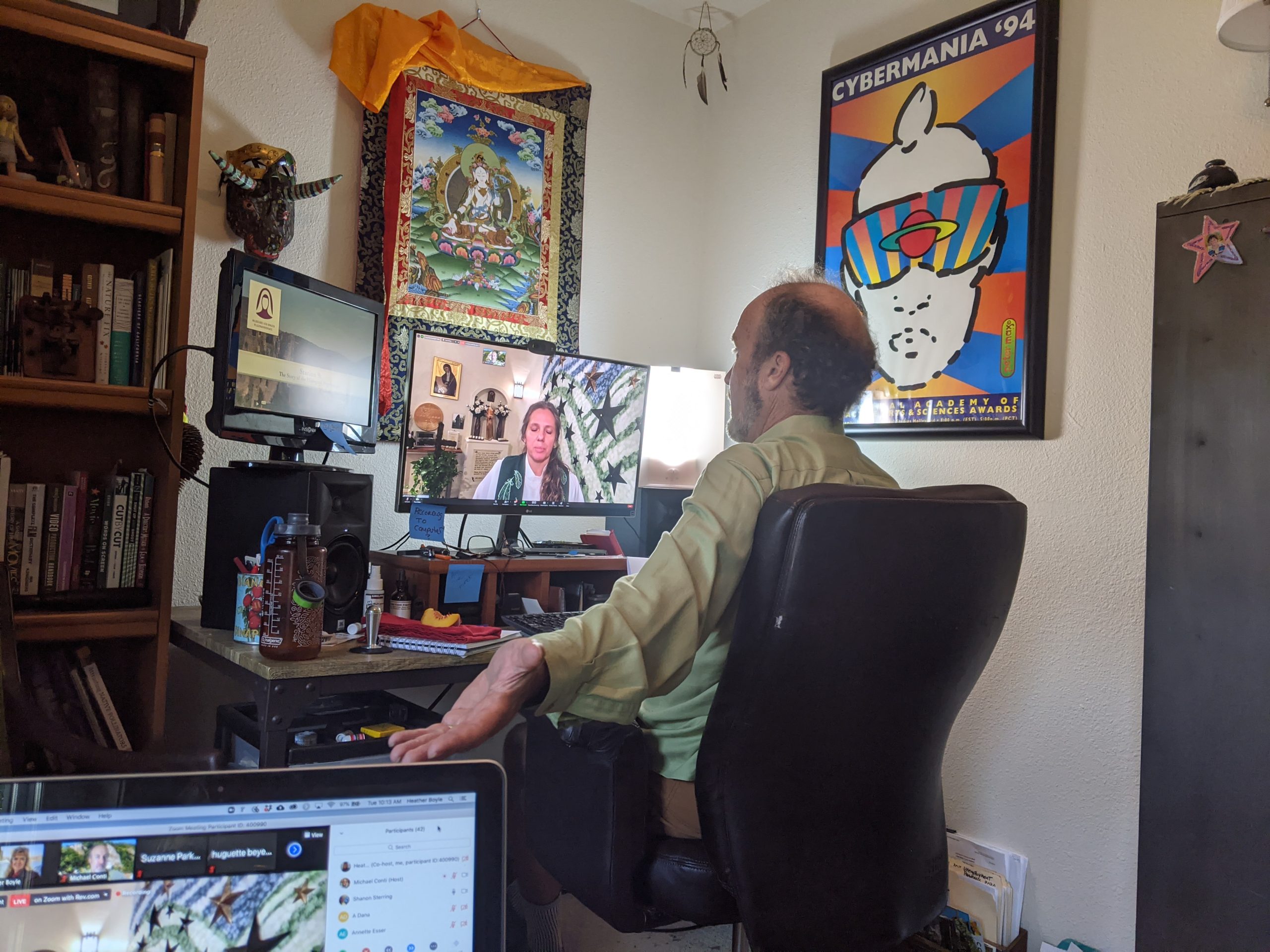
    Starting in 2020, during the pandemic, I decided to use a virtual live events format more fully where I can share those interviews in real-time and provoke a conversation in breakout rooms. These are the types of conversations which can lead to profound change and newer understanding of the world around us, and in us.

    The first experiment with live virtual events occurred with a VMuir Day Panel 2020 in which we celebrated John Muir’s one hundred and eight-second birthday during the Covid-19 pandemic on April 21, 2020. I asked my panelists questions about death, how they are connecting with nature while in isolation, and why John Muir is still relevant today.

    After running a bigger live virtual event in September of that same year for Saint Hildegard’s Feast Day on September 17th with over 150 virtual pilgrims attending the first live virtual Saint Hildegard Pilgrimage I have decided to make a repeat with Saint Hildegard presenters in 2021 (link below for sign-up).

    Hildegard Requirements

    • Has a personal connection to Saint Hildegard’s teachings, medicine, art or music
    • Done something interesting around that creative connection (has taken the plunge).
    • Is able to share their own process in doing that work.

    A work-in-progress

    I see each of us in Saint Hildegard, and Saint Hildegard in each of us too. That is a work-in-progress.

    Join with me in the conversation as we celebrate the spirituality and creativity of Saint Hildegard, as manifested by her natural medicine, art, writing, and music.

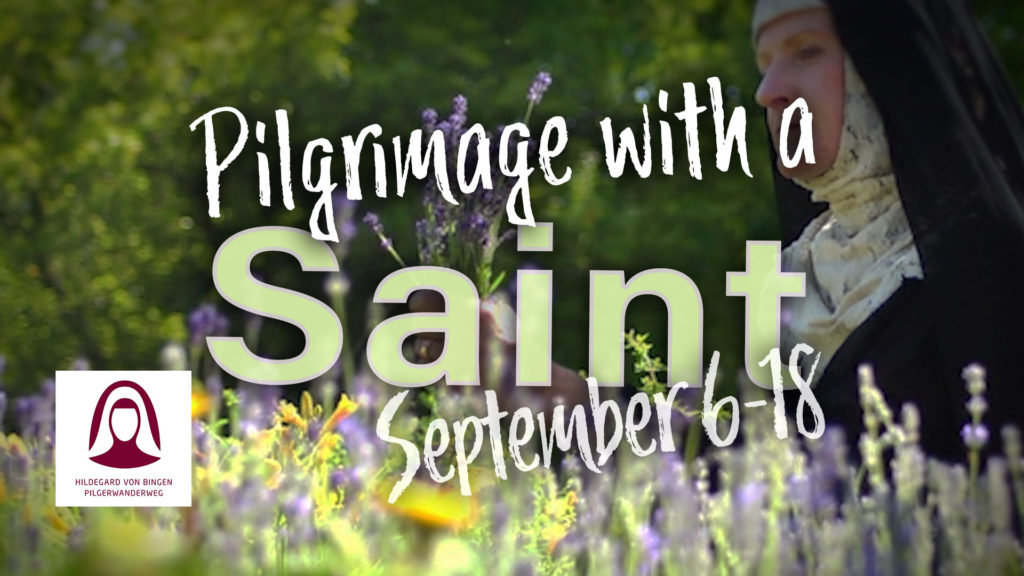
    Offering a virtual pilgrimage again in September for Saint Hildegard, both live and pre-recorded. Besides the 12-days of recordings, there are live 2-days of virtual events over Saint Hildegard’s Feast Day, September 17 & 18, 2021.
    https://sainthildegard.com/

    Join us in celebrating:

    Offering a live virtual pilgrimage again in September for Saint Hildegard, both live and pre-recorded. Besides the 12-days of recordings, there are live 2-days of live virtual events over Saint Hildegard’s Feast Day, September 17 & 18, 2021

    On September 17th 2021, at 1 PM EST, Saint Hildegard Feast Day starts with the ringing of the bells from the Hildegard Haus in Fairport Harbor, Ohio, followed by a sermon by Rev. Dr. Shanon Sterringer. On Saturday, September 18thRev. Carol Vaccariello starts the day at 1 PM EST. Later Rector Susan Springerprovides a “solemnity” for St John’s Episcopal Church in Boulder, Colorado.

    Rev. Dr. Matthew Fox who is the author of Illuminations of Hildegard of Bingen, Hildegard’s Book of Divine Works with Letters and Songs, Hildegard of Bingen, a Saint for Our Times: Unleashing Her Power in the 21st Century, will share some thoughts with us on spirituality and creativity.

  • Hildegard as Shaman?

    Hildegard as Shaman?

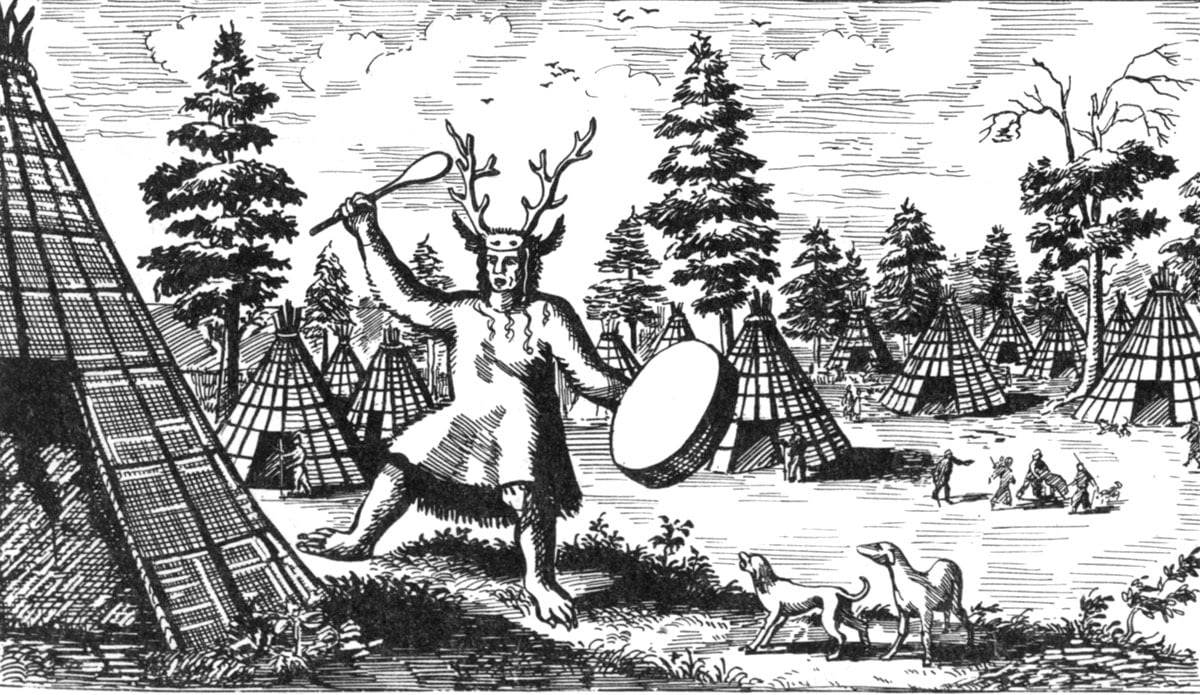
    Hildegard as Shaman: Matthew Fox writes in his Daily Meditations of 4/27/2021: “A shaman lives in two worlds at once. Poet Bill Everson speaks of the link shamans have with the Animal Powers and recognizes Christ’s relationship to such animal powers in Mark’s gospel following his baptism when he went into the desert.  Says Everson, “Christ related to the Animal Powers that preceded our more sophisticated religious impulses.””

    As a pilgrim-filmmaker, my own work with Saint Hildegard through the making of my film, The Unruly Mystic: Saint Hildegard, has made me also question if we could see Hildegard as Shaman through our modern-day lens. I realize that equating a Catholic Saint with shamanism is bound to rub some people the wrong way. I can thank Matthew Fox for the courage and insight to share that interesting perspective.

    “Hildegard too is much in touch with the Animal Powers. Time and time again she is visited by animals in her visions and paints them, including snakes that frame several of her paintings. She includes images of bears, leopards, lions, birds, vipers, scorpions, lobsters, and fish. Many of these beasts speak to her and advise her. She devotes an entire chapter in her book Physica to a discussion of animals and their uses for healing and assistance in our work. She recognizes that

    …birds symbolize the virtue a person reveals in his thinking when, by his internal premeditation, he reckons many things before they come forth in an illustrious deed.

    “Animals that run on land represent the “thoughts and meditations a person brings to completion in work,” as well as spiritual longing. Lions mirror the will of a person, while panthers show “ardent desire.” Tame animals that walk on land show “the gentleness of the human being.” In short, “animals have in them qualities similar to the nature of the human.””

    “A shaman is one who has undergone deep initiation and emerges to serve and heal the community. Hildegard was such a person. Estes defines an “initiated woman” this way:

    To be the keepers of the creative fire, and to have intimate knowing about the Life/Death/Life cycles of all nature—this is an initiated woman.”

    “Was there anyone who was busier keeping the creative fire alive than Hildegard?”

    hildegard as shaman
    Feather along the Hildegard Way, Germany 2019

    As one who has been creatively inspired by Hildegard as a filmmaker, I would answer with a resounding “No”. While I am sure others were keeping the “creative fire alive” during those times, we luckily have Hildegard’s work still with us. I see her as the Patron Saint of Creativity. Yet to think of her as a shaman as Matthew Fox shares?

    I have two ways of looking at that perspective. Having walked in Hildegardland as a pilgrim-filmmaker, I can testify the experience there resonated with me on a deeply spiritual level, similar to other places that are thinly veiled or considered as sacred landscapes. Specifically, I share a those experiences in my second film, The Unruly Mystic: John Muir.

    While those experiences might be profound for me personally, it doesn’t necessarily mean it is because someone blessed once was there. How Hildegard perceived her environment during her time, both internally and externally in her work, connects the past with the present. That is clearly evidence of someone that has a deep connection to spirit and the land.

    Finally, shamanism is also much like mysticism. Both are subject to cultural definitions as seen through our modern lens. I would invite us to think of the contributions and attributes that Fox has associated her with from his own unique perspective. There is much value in that observation.

    This particular thread that Matthew Fox started continues on his website. You can also find out more about Hildegard through his book below.

    Matthew Fox writes in Hildegard of Bingen about this amazing woman and what we can learn from her.

    In an era when women were marginalized, Hildegard was an outspoken, controversial figure. Yet so visionary was her insight that she was sought out by kings, popes, abbots, and bishops for advice.

  • Saint Hildegard and the usefulness of Hops – Cheers!

    Saint Hildegard and the usefulness of Hops – Cheers!

    A Time Before Hops

    Hops weren’t always used in beer brewing—in the earliest days, brewers used all kinds of plants to flavor beer.   Generally, a beer created without the use of hops is called a ‘gruit’ or ‘grut’. ‘Gruit’ (or ‘grut’) can also be the term used for the mixture of spices working as a bittering agent in the beer.

    Some herbs commonly used in gruit:

    • sweet gale
    • mugwort
    • yarrow
    • ivy
    • horehound
    • heather
    • juniper
    • ginger
    • aniseed
    • carraway

    and really, anything else a gruit producer thought would taste good in their brew. Gruit fell out of common usage in the last century or two, but is seeing a bit of a revival these days, so there are lots of resources available like Gruit Ale and Unhopped beers website.

    But this article is about hops, not gruit,  so according to this excellent Short History of Hops by beer historian Martyn Cornell, one early mention of the usefulness of hops comes from a surprising source: Abbess Hildegard von Bingen, the German mystic whose latin texts inform some of what we know about Medieval Europe.  I

    Historical Perspective

    About 1150, Abbess Hildegard of Bingen (1098-1179), mystical philosopher and healer, published a book called Physica Sacra, which translates best as “The Natural World”. Book I, Chapter 61, “De Hoppho”, or “Concerning the hop”, says of the plant:

    “It is warm and dry, and has a moderate moisture, and is not very useful in benefiting man, because it makes melancholy grow in man and makes the soul of man sad, and weighs down his inner organs. But yet as a result of its own bitterness it keeps some putrefactions from drinks, to which it may be added, so that they may last so much longer.”

    In Physica, Hildegard described the preservative qualities of hops when added to a beverage like beer. In the same book, she also mentioned that hop increases melancholy or “back bile,” one of Hippocrates’ “four humors” of physiology; the others are man’s choleric, phlegmatic, and sanguine dispositions. Today we know that hops can relax the nervous system and thus have a calming, sedative effect, which promotes sleep. This insight made Hildegard a progressive in her time, given that her contemporaries recommended hops as a treatment for exactly the opposite affliction, depression. Hildegard also wrote extensively about barley, which she considered beneficial for the stomach and intestines; she recommended a drink made from barley as a restorative after a cold or stomach flu.

    Modern thinking

    Jay. R. Brooks of Brookston Beer Bulletin in his researched article on chasing down the origins of Hildegard being consider the patron saint of beer,  comments “If you made it through all of the accounts of her life, including her Wikipedia page, one thing you’ll notice is that none of them mention her contribution to the brewing sciences, or indeed anything about her mention of hops. That appears to be a more modern interpretation, though I’m not sure of its origin. One thing seems clear, however, and that it’s an association that here to stay.”

    German farmers were doing good business selling hops to breweries across Northern Europe by the 13th century.

    While I like the idea that Hildegard has something to do with the idea of the homeopathic benefits of using hops in beer,  her way of thinking about things continues to support the idea that she is the patron saint of creativity.   Who doesn’t want a beer after finishing their creative pursuit?  Especially one called Naughty Hildegard (tongue in cheek)?

    Naughty Hildegard ESB from the Driftwood Brewery in Victoria, British Columbia, Canada

    The Health Benefits of Beer and Hops

    Research continues to support the health benefits of beer and the moderate consumption of alcohol, including wine. Many of these health benefits are associated with hops, though some are also linked to trace elements like silicon or the affect of low-levels of alcohol.

    Healthy Hildegard gathered a few of the most well-documented health benefits of beer to help you feel better about your nightly pint.

    Hildegard von Bingen receives a vision (maybe about hops, who knows?).

    More on hops here.