Category: Feast Day

  • Asking a question is hard in live virtual events

    Asking a question is hard in live virtual events

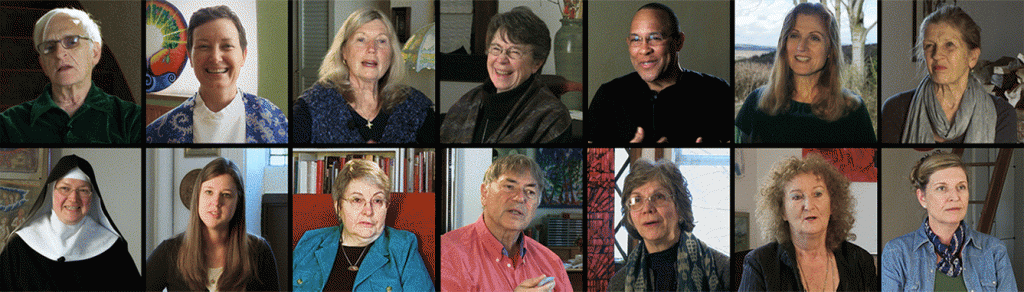
    As the filmmaker-pilgrim behind The Unruly Mystic Series, I have always found the answers more instructive than the questions. Learning what to ask in the first place — that is the hardest part. Perhaps that instinct comes from my DNA as the son of an astronomer, Peter S. Conti (September 5, 1934 – June 21, 2021). The answers I received through many hours of interviews gave me insight into my own constantly developing spirituality — a luxury I don’t have in live virtual events, where there is no thoughtful editing to fall back on.

    Through the process of making these films and running live virtual events, I gained confidence in my own creative work and in the importance of making something of value for the world. For those who haven’t yet taken that plunge fully — there is someone out there right now looking for something that your future self will be creating.


    Going Live in Virtual Events

    Through the filmmaking process I have encountered many people whose knowledge and personal journeys would have enriched the films — but it is virtually impossible to include everyone in a 120-minute documentary. Each story is unique, each inspirational in its own way.

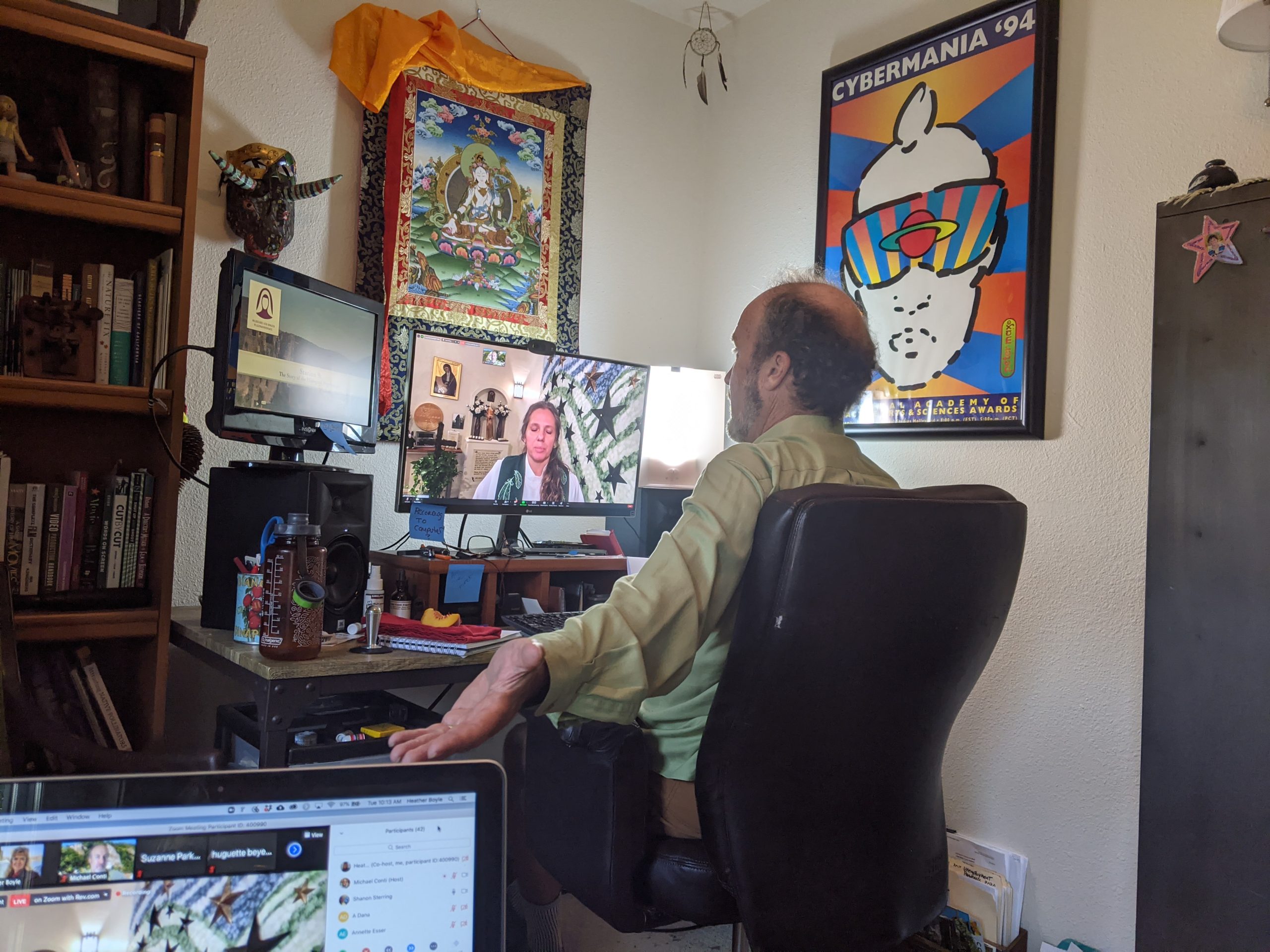
    Starting in 2020, during the pandemic, I began using a live virtual events format to share those conversations in real time — with breakout rooms that allow for the kind of exchange that can lead to genuine understanding and change. These are the conversations that films can point toward but never fully contain.

    The first experiment was a VMuir Day Panel in 2020, celebrating John Muir’s 182nd birthday on April 21, 2020, during the height of the Covid-19 pandemic. Panelists were asked about death, connecting with nature in isolation, and why John Muir remains relevant today.

    That September, over 150 virtual pilgrims attended the first live Saint Hildegard Pilgrimage — a virtual gathering for her Feast Day on September 17th. The response was extraordinary and confirmed that this format has a life of its own.


    Hildegard Presenter Requirements

    Presenters for the Saint Hildegard virtual events are invited based on the following criteria:

    • A personal connection to Saint Hildegard’s teachings, medicine, art, or music
    • Has done something meaningful around that creative connection — has taken the plunge
    • Is able to share their own process and experience in doing that work

    A Work in Progress

    I see each of us in Saint Hildegard, and Saint Hildegard in each of us. That is a work in progress — and an ongoing invitation.

    Join the conversation as we celebrate the spirituality and creativity of Saint Hildegard, as manifested through her natural medicine, art, writing, and music.


    Saint Hildegard Virtual Pilgrimage — September 2021
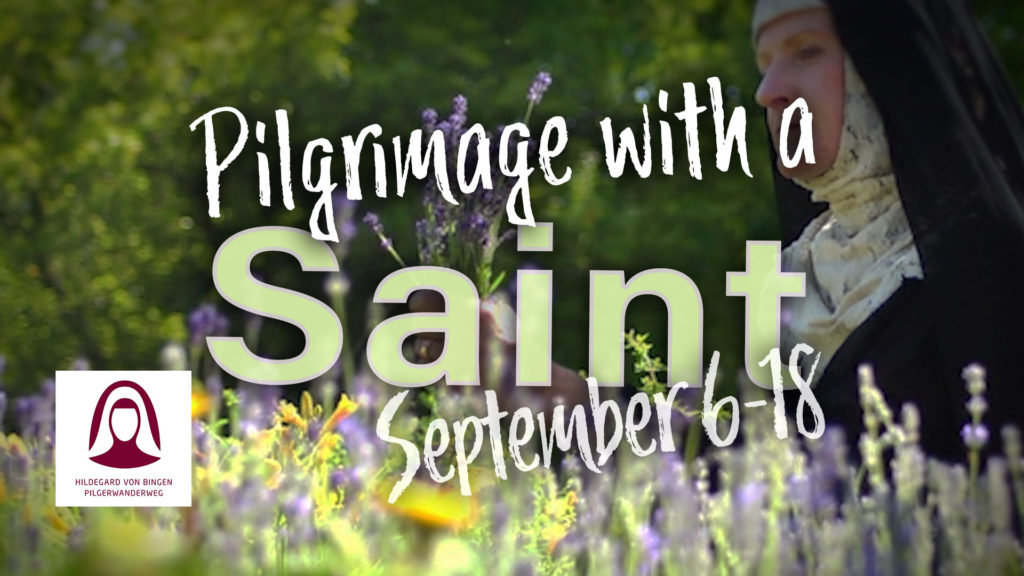
    Virtual Pilgrimage with Saint Hildegard — September 17 and 18, 2021, live and pre-recorded events
    Virtual Pilgrimage with Saint Hildegard — sainthildegard.com

    The September 2021 gathering offered a live virtual pilgrimage — both live and pre-recorded — spanning 12 days of recordings alongside two live event days over Saint Hildegard’s Feast Day, September 17 and 18, 2021.

    On September 17th at 1 PM EST, the Feast Day opened with the ringing of bells from Hildegard Haus in Fairport Harbor, Ohio, followed by a sermon from Rev. Dr. Shanon Sterringer. On Saturday, September 18th, Rev. Carol Vaccariello opened the day at 1 PM EST, followed by Rector Susan Springer offering a solemnity for St John’s Episcopal Church in Boulder, Colorado.

    Rev. Dr. Matthew Fox — author of Illuminations of Hildegard of Bingen, Hildegard’s Book of Divine Works with Letters and Songs, and Hildegard of Bingen, a Saint for Our Times: Unleashing Her Power in the 21st Century — shared reflections on spirituality and creativity with the gathered community.
  • The Hildegard of Bingen Trail in Germany

    The Hildegard of Bingen Trail in Germany

    Hildegard Pilgrimage Path

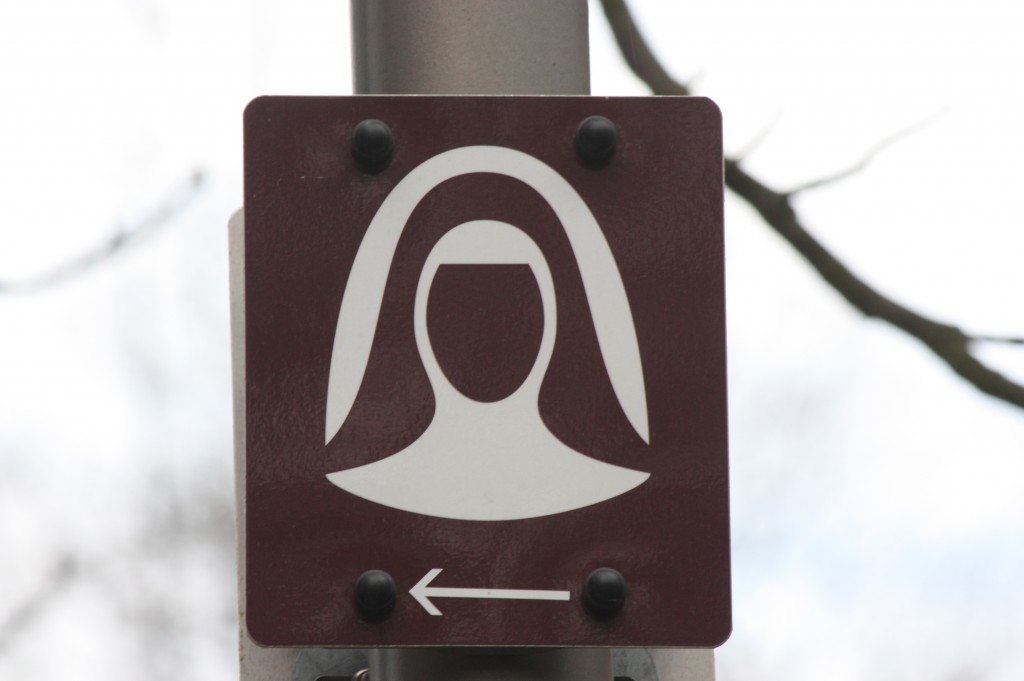
    “I love this sign, don’t you? I’ve traveled to a lot of holy places, but Bingen, Germany, is the only place where the pilgrimage route is marked by a nun sign. Hildegard is their most famous resident, and they want to make it easy for pilgrims to follow in her footsteps.

    And more people are doing just that, for Hildegard of Bingen is enjoying a surprising career resurgence for someone who’s been dead for nine centuries (for more information on her biography, see The Life of Hildegard of Bingen). Her fan club is certainly diverse: feminists hail her as a foremother, environmentalists praise her views on nature, New Age enthusiasts recognize her as a kindred spirit, and musicians record her chants (the CD A Feather on the Breath of God was a surprise best-seller in 1988). And in 2012 Hildegard was named a Doctor of the Church by Pope Benedict XVI, an honor given to only four women saints.”

    The Hildegard von Bingen pilgrimage route leads approximately 135 kilometers from Idar-Oberstein to Bingen am Rhein and Rüdesheim-Eibingen through the land of Hildegard.

    Hildegardweg / Hildegard Pilgrim Path

    Itinerary program for an 8-day pilgrimage path (see map)8-Strecken-Programm oder 8-Tage-Pilgerwanderweg (von Sonntag bis Sonntag)

    • Erste Strecke — 18.7km / 4h 7min
      Idar-Oberstein – Herrstein – Niederhosenbach – Bundenbach – Hahnenbach
    • Zweite Strecke — 6.8km / 1h 31min
      Hahnenbach – Oberhausen – Kallenfels – Bergen – Kirn – Schloss Dhaun
    • Dritte Strecke — 17.7km / 3h 39min
      Schloss Dhaun – Simmertal – Bad Sobernheim – Staudernheim – Disibodenberg – Odenheim/Glan
    • Vierte Strecke — 12.2km / 2h 38min
      Disibodenberg – Duchroth – Oberhausen/Nahe – Burg Schlossböckelheim – Waldböckelheim – Burgsponheim – Sponheim
    • Fünfte Strecke — 9.1km / 2h 06min
      Sponheim – Spabrücken
    • Sechste Strecke — 8.4km / 1h 48min
      Spabrücken – „Drei-Madonnen-Weg” – Schöneberg – Madonnenweg – Stromberg
    • Siebte Strecke — 9.8km / 2h
      Stromberg – Bingerbrück
    • Achte Strecke — 5.4km / 1h 02min
      Bingerbrück – Bingen – Eibingen

    Good Reading

    I stumbled across this blog about Spiritual Travel and pilgrimage — Read more from Lori Erickson.

    Travel writer, Episcopal deacon, and author of the Holy Rover blog at Patheos, Erickson is an engaging guide for pilgrims eager to take a spiritual journey. Her book describes travels that changed her life and can change yours, too.

  • What was Saint Hildegard the Patron Saint of?  Culinary arts? Creativity?

    What was Saint Hildegard the Patron Saint of? Culinary arts? Creativity?

    Culinary arts? Creativity? The arts? The question of what Saint Hildegard is the patron saint of came up recently when I was asked where I first heard of Saint Hildegard as the Patron Saint of Creativity. In my documentary The Unruly Mystic: Saint Hildegard, I invited many of the interviewees to share whether they thought of her as the patron saint of creativity — and that framing became the gold standard in the final film. While I find it hard to believe I alone coined that phrase when I started making it, I do see that everything she did falls under what I call the pursuit of creativity.

    The Loyola Press puts it plainly: “Actually she is not an official patron saint of anything — which may be a good thing, because to think of Hildegard merely as a patron saint is to gloss over her profound capabilities and influence.” And yet the same source notes that her recipe for “Cookies of Joy” is still used today, with Hildegard encouraging bakers to eat them often: “They will reduce the bad humors, enrich the blood, and fortify the nerves.” So is Saint Hildegard the patron saint of culinary arts as well? The question keeps expanding the more you look at her life.

    When you ask the question slightly differently — who is the patron saint of the arts? — you arrive at another remarkable nun, St. Catherine of Bologna. A fifteenth-century cloistered woman who lived and died in relative obscurity, she doesn’t seem the most obvious choice. Yet a closer look reveals a saint whose creative spirit, mystical visions, and struggle with doubt make her deeply relatable to artists working today. She painted, she wrote, she composed — and she did it all from inside a monastery wall.

    Scholars and religious communities have shown renewed interest in the guide she wrote for novices, The Seven Spiritual Weapons. One of those weapons might speak most directly to artists: in exhorting her sisters to trust in God, she writes, “to believe that alone we will never be able to do something truly good.” That humility — the acknowledgment that creativity flows through us rather than from us — is a posture both saints share.

    The intersection of faith and art continues to generate surprising destinations. The St. Catherine of Bologna Arts Association of Ringwood, New Jersey holds an annual exhibition called “A Little Bit of Soho in Ringwood,” timed to the weekend nearest St. Catherine’s March 9th feast day. It draws hundreds of artists and thousands of visitors. On the 600th anniversary of her birth, the theme was “Celebrating the Light That We Are” — a phrase that could as easily describe Hildegard’s entire life’s work.

    Pope Benedict spoke of St. Catherine with words that resonate equally for Hildegard:

    “From the distance of so many centuries she is still very modern and speaks to our lives. She, like us, suffered temptations — of disbelief, of sensuality, of a difficult spiritual struggle. She felt forsaken by God, she found herself in the darkness of faith. Yet in all these situations she was always holding the Lord’s hand. And walking hand in hand with the Lord, she walked on the right path and found the way of light.”

    All of which returns us to St. Hildegard as patron saint of creativity. If you are an artist, a musician, a writer, or anyone who has ever struggled to trust what you see and know — why not ask her for support in your own work?

    Here is a prayer invoking her inspiration:

    Dearest St. Hildegard, let thy gracious prayer be for this: that in all things, we serve God in bringing souls, including our own, to Him, and delightfully so. Let righteousness enfold hearts moving in and moved by the arts. Let thanks be our joyous cry, our victory shout, our honoring trumpet blast, with gratitude that our Creator gave us the sensibility to know and love Him; that He let us love as He loves, forgive as He forgives; and leads us to be as perfect in purity as He is. Actualize all our divinely-granted potential, St. Hildegard, for the chief end of uniting as the flock of our Good Shepherd, wisely using every gift He has given us. Amen.

    I would invite you to watch the film and draw your own conclusions — or better yet, let the people in it speak for themselves.

    Watch The Unruly Mystic: Saint Hildegard — who is the patron saint of creativity?
    Who is the patron saint of creativity? Watch the film and decide.